

15 March 2026
Artist Highlight - e.L.s designs
Interview and Review
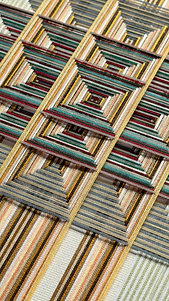
e.L.s designs is a Glasgow-based textile artist who graduated with a BA (Hons) in Textiles from The Glasgow School of Art in 2024. Working primarily with colour thread warping on canvas and cork, their practice explores structure, movement, and materiality through complex, one-of-a-kind surfaces. Blending traditional textile processes with contemporary design, e.L.s designs is expanding into wood, stone, and interior-led applications. Their work sits at the intersection of craft, art, and functional design, celebrating texture, rhythm, and innovative material use.



ARTIST INTERVIEW
1. Your work develops colour thread wrapping into sculptural surfaces. What interests you about translating a traditional textile process onto rigid materials such as wood and canvas?
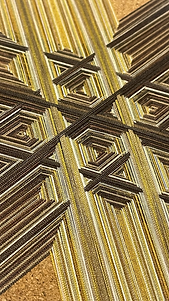
Translating colour thread warping onto rigid surfaces such as wood and canvas allows the technique to move from a preparatory textile process into a sculptural method of constructing colour and form. The fixed surface holds precise tension, making the threads the primary visual element rather than a foundation for weaving. This creates structured, relief-like surfaces where colour, spacing, and shadow interact. I’m interested in how this shifts the work between textile, drawing, and object. Using rigid materials also challenges the expectation of softness in textiles and opens possibilities for the technique to exist within interiors, installations, and other designed surfaces.
2. Atmospheric states. How do these conceptual ideas connect with the visual language of colour and structure?
Atmospheric states influence how I approach colour, rhythm, and tension in my work. I use gradual shifts in thread colour and density to create subtle gradients that reflect changing qualities of light, weather, and atmosphere. The structure of the threads helps organise these transitions, with spacing and layering producing depth and shadow across the surface. This allows colour to feel fluid rather than fixed. As the viewer moves, the work shifts slightly through light and perspective. I’m interested in translating the quiet, changing qualities of atmosphere into a controlled system of thread, where colour and structure work together to create movement and spatial depth.
3. Materials such as Nylon, Cotton and Silk create different reflections and tensions. How do these material qualities shape the visuals rhythm of the composition?
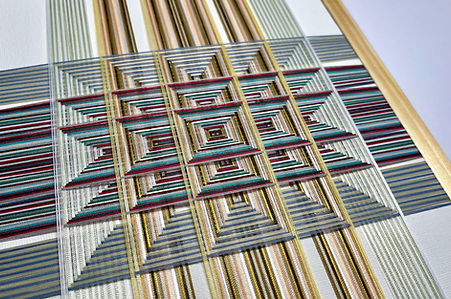
Different materials shape how the composition behaves visually and structurally. I choose threads like nylon, cotton, and silk because each holds tension and reflects light differently. Nylon creates sharper lines and stronger tension, while cotton absorbs light and softens the surface. Silk reflects light more subtly, adding shifts in tone as the viewer moves. By combining these materials, I can control rhythm across the surface through variations in shine, density, and tension. These differences create a visual pulse within the composition, where the materials influence how colour appears and how the work changes with light and viewpoint.
4. Your practice moves between textile craft and architectural surface. How do you see these works operating within both artistic and interior spatial contexts?
My practice sits between textile craft and architectural surface through its focus on structure, material, and space. While the work originates from textile processes, presenting it on rigid surfaces allows it to function more like a constructed relief or wall-based object. I see the pieces operating both as artworks and as spatial elements within interiors. The thread structures interact with light, shadow, and viewpoint, allowing the surface to subtly change within a space. In this way, the work can exist in gallery contexts but also translate naturally into interior environments, where colour, texture, and structure contribute to the atmosphere of a room.
5. Optical movement appears to emerge from the layering of threads. How important is the viewers movement and shifting perspective in experiencing these works?
Viewer movement is an important part of how the work is experienced. The layering and tension of the threads create subtle optical shifts that change as the viewer moves around the piece. Light catches the threads differently from different angles, causing colours and densities to appear to shift across the surface. Because of this, the work is not static; it unfolds gradually through changing perspective. I’m interested in how this interaction encourages a slower way of looking, where the viewer becomes aware of small variations in colour, structure, and light as they move in relation to the piece.


THREAD, STRUCTURE, AND THE MOVEMENT OF COLOUR
Review by Chih-Yang Chen, Art Director