

10 March 2026
Artist Highlight - Irene Huang
Interview and Review
Irene Huang is a London-based designer maker with a background in design and architecture. She works primarily with wood and ceramics, designing and making each piece herself. Her practice combines structural thinking with hands-on craft, often using reclaimed and offcut materials. By integrating ceramic elements into wooden furniture, she explores how strength, fragility, and adaptability can exist within the same object. Her work reflects an interest in low-waste making, modularity, and the ways everyday furniture can feel personal, playful, and quietly considered.

ARTIST INTERVIEW
1. What Holds combines oak and stoneware within a modular furniture structure. What drew you to exploring the relationship between these two contrasting materials?
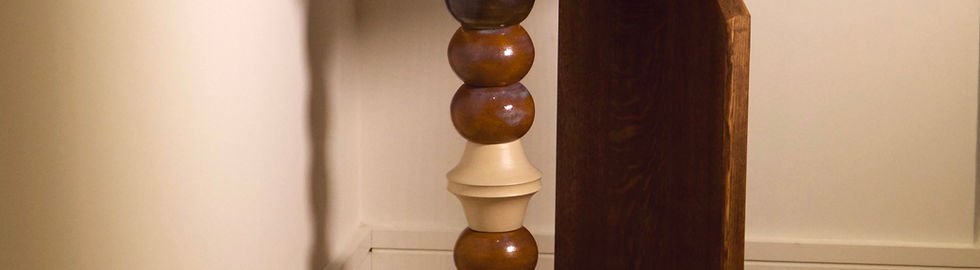
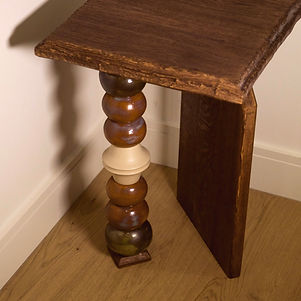
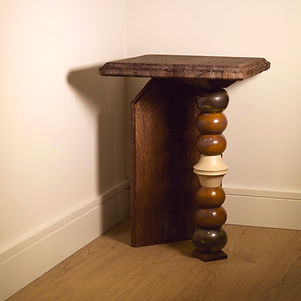
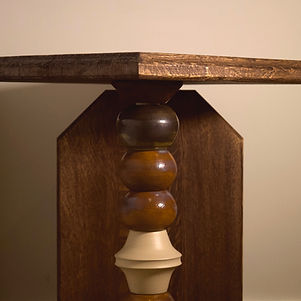
I was interested in bringing together two materials that carry very different characteristics and methods of making. Oak has a natural beauty in its grain pattern, but it tends to remain relatively consistent in colour and surface. Ceramic, on the other hand, embraces a much wider range of textures and colours through glazing and firing. Introducing ceramic elements into the wooden structure allows these variations to emerge within a more stable framework. The warmth and strength of the wood creates a structure that holds the ceramic components, while the ceramics bring visual and tactile diversity to the piece.
2. The ceramic components are threaded onto wooden rods and can be rearranged. How does this element of reconfiguration influence the way the object is experienced?
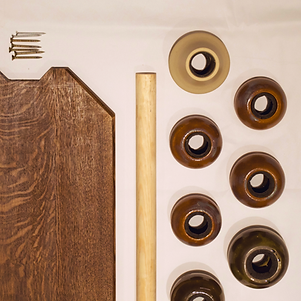
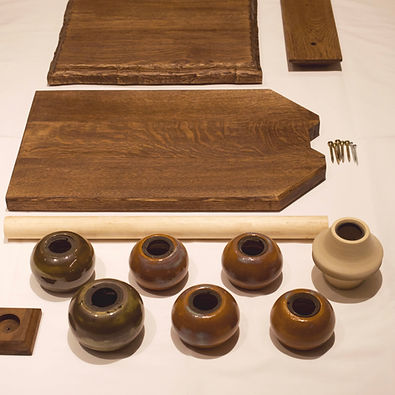
The possibility of rearrangement allows the work to remain open rather than fixed. By stacking the ceramic pieces onto rods, the structure becomes something that can shift subtly over time. This reconfigurability encourages a slower engagement with the object —it invites someone to pause, touch, and consider balance and composition. The work becomes less about a single final form and more about a process of ongoing adjustment.
3. The title What Holds suggests both physical support and emotional resonance. How do these different meanings inform the design of the work?
The title reflects a dual question: what physically holds a structure together, and what holds people together emotionally. The wooden framework literally supports the ceramic components, but the work also gestures toward less visible forms of support—care, relationships, and shared spaces. Living and working away from home has made me more aware of the invisible forces that connect people across distance. Through my practice and personal experience, I often reflect on how fragile yet persistent these bonds are, and how objects might quietly embody these forms of holding, both materially and metaphorically.
4. Ceramic elements introduce fragility within a wooden framework. How do you negotiate this tension between strength and vulnerability?
That tension is central to the work. Wood provides stability and durability, while ceramics carry a certain delicacy and risk of breakage. By placing the ceramic pieces within a supportive wooden structure, the work becomes a negotiation between those qualities. I’m interested in how vulnerability can exist within systems of support, and how fragility can be acknowledged rather than concealed.
5. The work invites interaction through subtle rearrangement of its components. How important is the viewer or user’s participation in completing the piece?
Participation is important because it activates the work. When someone adjusts the arrangement, even slightly, they become part of the process of balancing and holding the structure together. That interaction shifts the work from something purely observed to something experienced. The piece is therefore never entirely finished—it continues to evolve through small acts of engagement.
6. Within The Invisible Made Visible, your work highlights the quiet labour of assembling reclaimed materials. What aspects of care or process do you hope viewers become aware of when encountering the work?
I hope viewers notice the small gestures involved in assembling the work — the sanding of reclaimed wood, the shaping and firing of the ceramic pieces, and the careful fitting of each component. These processes are often invisible in finished objects. By leaving traces of the process visible, such as the marks in the wood or variations in the ceramic surfaces, the work acknowledges the time and attention involved in bringing different materials together. It also reflects a form of care: repairing, reusing, and patiently assembling fragments into a new structure.


STRUCTURES OF CARE AND QUIET BALANCE
Review by Chih-Yang Chen, Art Director