

22 December 2023
Artist Highlight - Mudai
Interview and Review
Mudai, an artist from mainland China, is currently studying at Kingston University School of Art. Graduated in Architecture from the University of Liverpool in 2021. Born in a family of scientists, she also learned about various biological experiments. She endows each artwork with her interdisciplinary study experience, and firmly believes that natural materials can express the emotions of art workers. She hope to research deeper into the theme that opposition to anthropocentrism and the resistance against human intervention in nature. That is also the contradiction between culture, science, and nature.


ARTIST INTERVIEW
1. Your interdisciplinary study experience in both Architecture and Art is fascinating. How do you incorporate the knowledge from these fields into your ceramic works and traditional rock paintings, and how does it influence your artistic expression?
While, the experience in architecture study influenced me to care about the space and materials. For instance, the tutors always talk about “less is more” in contemporary architecture design process. We focusing the “trip”, the “space” and the “light”, these are the alphabet for Architectural languages. Which share the similar sequence with the “storytelling” process in visual communication, we use colours, shapes to show our emotions. The only part which differently, is that, now I changed from digital designing into handcraft. Also, it cannot be denied that, “sustainable” is the most popular key word in this era. My architectural background has deepened my emphasis on the effective application of materials. Ceramic clay and rock painting pigments are both sourced from the elements of nature. These element are the fundamental things for us and for all the creatures in this world. I also engage in the hands-on creation of rock pigments. Despite the time-consuming process, it allows me to capture the colours sourced directly from the earth.
2. "Repairing Fruits" is a thought-provoking art series that beautifully combines the fragility of porcelain restoration with the realm of fruits. Could you share the inspiration behind this captivating concept and what message you aim to convey through your art?
The initial inspiration for this concept came to me during a project where I used traditional Chinese painting techniques to depict a melon. carefully incorporating the natural patterns of its skin, leaving white spaces that resembled the gaps in cracked porcelain. This resemblance prompted me to draw a parallel with the process of restoring ceramics in museums. Occasionally, archaeological discoveries yield artefacts shattered into just a few fragments, yet skilled artisans painstakingly restore and reconstruct them, leaving behind spaces that invite imagination. This aesthetic of fragmented beauty bears a resemblance to the Venus de Milo with her missing arms – broken yet tangibly embodying the opulence of her era.
These musings led me to contemplate the swift advancements in genetic engineering in our contemporary age. Just as fruits have undergone generations of modifications, I wondered: What were their original forms like? Could there come a time when the primal versions of these fruits are only displayed in museums, much like repaired porcelain treasures? This concept challenges the viewers with a question: What will the current strides in gene manipulation truly bring forth for us?
3. The delicate balance between human progress, science, and nature is a central theme in your art. How do you envision this balance and the relationship between our relentless pursuit of scientific advancements and the preservation of nature's authenticity?
The balance between this two topics is always controversial. I endorse posthumanism and oppose anthropocentrism. "Humans have no inherent rights to destroy nature or set themselves above it in ethical considerations a priori." A biology mentor who significantly influenced me once asked, "What would happen if there were no doctors in the world?" I responded almost instinctively, "Humanity would evolve." He nodded and asked, "In that case, does our profession hold meaning?" This question has troubled me for years, and I find it difficult to answer. My family's involvement in biology and scientific research has deeply impacted me, making me feel conflicted about the cruelty of animal and cellular experiments, while understanding our fear of death.
The endeavour of “Repairing Fruits” is just a minor topic, not yet extending to a firm stance against animal experimentation or meat consumption driven by anthropocentrism. Nevertheless, I believe it serves as a starting point, and I aspire to share this controversial subject with everyone.
4. "Repairing Fruits" explores the impact of human interventions on the appearance and essence of fruits. How do you perceive the potential consequences of genetic modifications and mass commercialization on biodiversity and ecological balance?
This is an important topic that involves various aspects such as ethics, environmental protection, and sustainable development. I believe that humans should cultivate a broader awareness of their relationship with other species and adopt an attitude of respect and equality across all levels. While many of us are now embracing vegetarianism, advocating against intensive farming, and opposing the slaughter of animals, I believe that the root of human speciesism goes beyond these actions.
We coexist with all forms of life on this planet, including animals, plants, bacteria, fungi, and various inorganic elements. Merely reducing meat consumption is not enough to improve the entire Earth's food chain. Even in our research on plants, genetic modifications, and mass commercialization, the underlying perspective still revolves around a human-centric form of self-redemption.
Our consciousness has not yet reached the point where we should halt merely at dietary changes. Rather, we should acknowledge the equality of all that surrounds us, and hold reverence for every living being. Speciesism should have no place in any domain, including the realm of science that we often take pride in.
5. The symbolism of the melon, seedless pineapple, and hybridised peach speaks volumes about the complexities of our interactions with nature. Could you elaborate on the emotions and sentiments you wish to evoke in viewers through these art pieces?
I aim to evoke a sense within the audience, achieved through the carefully arranged exhibits, that they are observing these "fruit relics" within a museum setting. My intention is to create a perceptible gap between the spectators and the fruits that are most commonplace in our lives. This divide is shaped by the passage of time and the interventions of human hands.
As an example, ancient Chinese poetry once vividly described watermelons from over a thousand years ago during the Song Dynasty, featuring yellow-hued flesh and crimson seeds. This stands in stark contrast to the watermelons of today with their red flesh and black seeds. Notably, those historical watermelons boasted larger seeds and less saccharine flesh. Consequently, what kind of emotions do we experience when we truly encounter such a watermelon? Beyond mere astonishment, a sense of melancholic nostalgia arises. This feeling stems from the vast expanse of time and the influence of human cultivation, which creates a gulf between us and the depictions found in historical texts.
In a way, if contemporary observers can unearth emotions beyond surprise upon encountering these "restored fruits," then I would consider my endeavors to have met their mark.
6. The use of ceramics and traditional rock paintings in your art is intriguing. How do these mediums help you convey the delicate and nuanced emotions associated with the interplay between humans and nature?
Clay originates from the earth, and the materials used in rock paintings also stem from nature. Working with them is akin to my hands caressing the land, forging a unique connection to the world I inhabit. Unlike many other artists, I occasionally invite viewers to touch my creations, to listen to their resonance. This embodies my perception of the intertwining bond between humanity and art, as well as the connection between humans and the natural world. This tactile interaction offers an intimate exploration, allowing individuals to experience the textures, warmth, and even sounds that emanate from my pieces, thus fostering a deeper understanding of the inherent relationship we share with both art and the environment.
7. Looking forward, what new themes or directions are you considering for your artistic journey, and how do you see your work evolving to continue addressing the important relationship between humanity and the natural world?
As mentioned earlier, my family's influence ignited a deep interest in biology and science within me. However, I've chosen not to pursue scientific research due to my concern about disrupting nature as a human. Instead, I'm dedicated to interdisciplinary art, aiming to illuminate the harmonious connection between humans and all life forms from diverse perspectives. I'll continue using traditional methods and materials to enhance the bond between art and nature.
While some may be drawn to radical approaches that garner immediate attention, my philosophy is rooted in the belief that genuine transformation arises from a gradual and introspective process. Much like the way a stream's meandering flow patiently carves its course, I aspire for my creations to delicately infiltrate the inner world of those who observe them. These artworks, like the soothing yet persistent trickle of a spring, have the potential to evoke contemplation, insight, and ultimately a renewed perspective on the intricate tapestry of life. In another life, I'd willingly embody the essence of the ordinary.


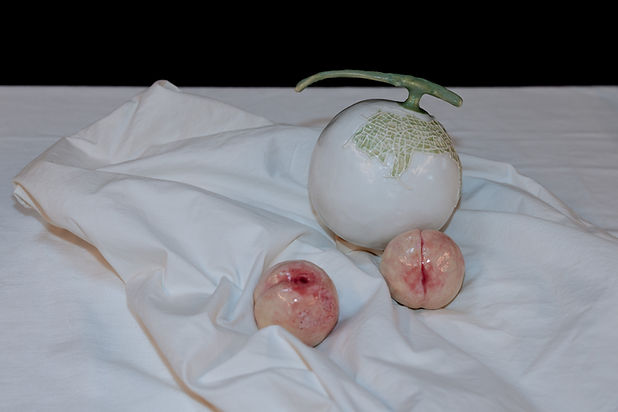
FRAGMENTS OF A FUTURE MEMORY
Review by Chih-Yang Chen, Art Director